
FSC Chain of Custody SAI-COC-006625 · valid to 30 May 2031 Heyuan, Guangdong, China Are you a reseller? Join our trade programme ›
DEXINLI Adhesive label manufacturer
Home/ Materials/Material guide

Material guide

Which label material should you use?

Most material comparisons start with the material name. That is the wrong place to start, because a stock is only right or wrong against a surface and an environment. The same BOPP that is the obvious answer for a bottle in a chiller is the wrong answer for a dry carton in a warm warehouse.

Request printed samples Compare every stock we run

Four questions, in the order that narrows it

Answer these before you look at a material name and most of the catalogue falls away on its own.

01
What is the surface?

Glass, rigid PET, aluminium, corrugated board, a textured plastic and a woven fabric each hold an adhesive differently. A smooth rigid surface lets you choose on looks; a textured or curved one constrains the construction, and sometimes the answer is a construction we have to develop rather than a stock we can pull off the shelf.

02
Will it meet moisture, oil or alcohol?

Paper drinks condensation. Films do not. Oil and alcohol attack some adhesives and leave others alone. This is the question that most often rules paper out entirely, and it is cheaper to answer before you choose a print process than after.

03
How long does it need to stay on, and how is it removed?

A permanent bond and a cleanly removable one are different products. Ask what "removed" means for your application — peeled off by the end user, or taken off by your own line at the end of a cycle — because that decides whether a removable pressure-sensitive adhesive is acceptable or whether you are designing a liner.

04
How much are you printing, and how many colours?

Digital printing carries the cost in the press; flexographic carries it in the plate and cylinder. The break-even moves with colour count and run length, and it moves the recommendation as well — a short run of a metallic stock may be cheaper digitally than the tooling implies.

Stock by stock

What each one is for, and the case against it. The line under "not when" matters more than the one above it — it is what saves a trial run.

Paper
Coated Paper

The economical default. Excellent colour and print detail for dry, indoor packs.

Dry, indoor, short shelf life.

Not when: Anything that sweats, freezes or carries oil. Paper is the wrong answer the moment condensation is involved — it is not a matter of how good the varnish is.

Film
BOPP Film

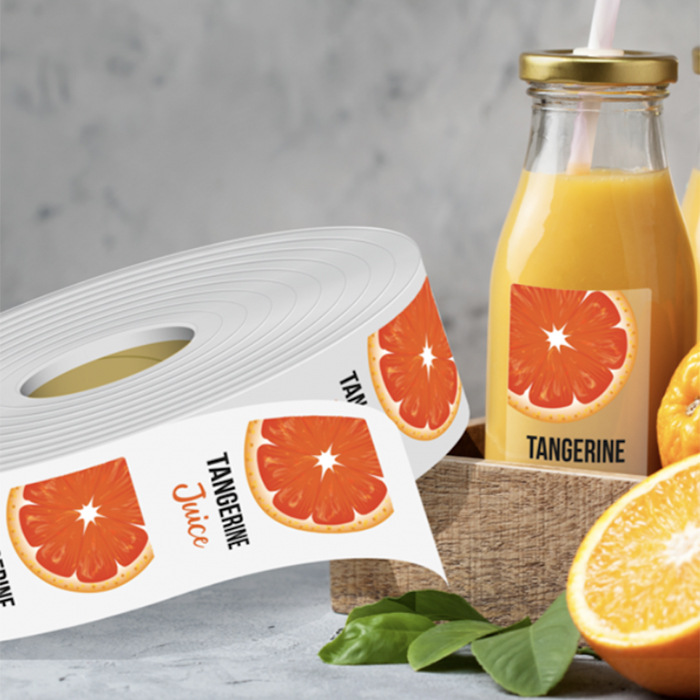
Waterproof and tear-resistant. The standard for bottles, cans and chilled drinks.

Bottles, cans, chilled drinks, anything wet.

Not when: Sharp or heavily textured surfaces where a film can lift at the edge. Also the wrong choice where a genuinely scratch-resistant surface is needed and PET is the better base.

Film
PET

Thin, strong and chemically resistant. Holds detail in clear and metallic grades.

Thin, strong and chemically resistant. Clear or metallic grades.

Not when: Very heavy die-cut shapes on thin film can web or tear at the cut. Tell us the shape and we will say so before we quote.

Film
PVC

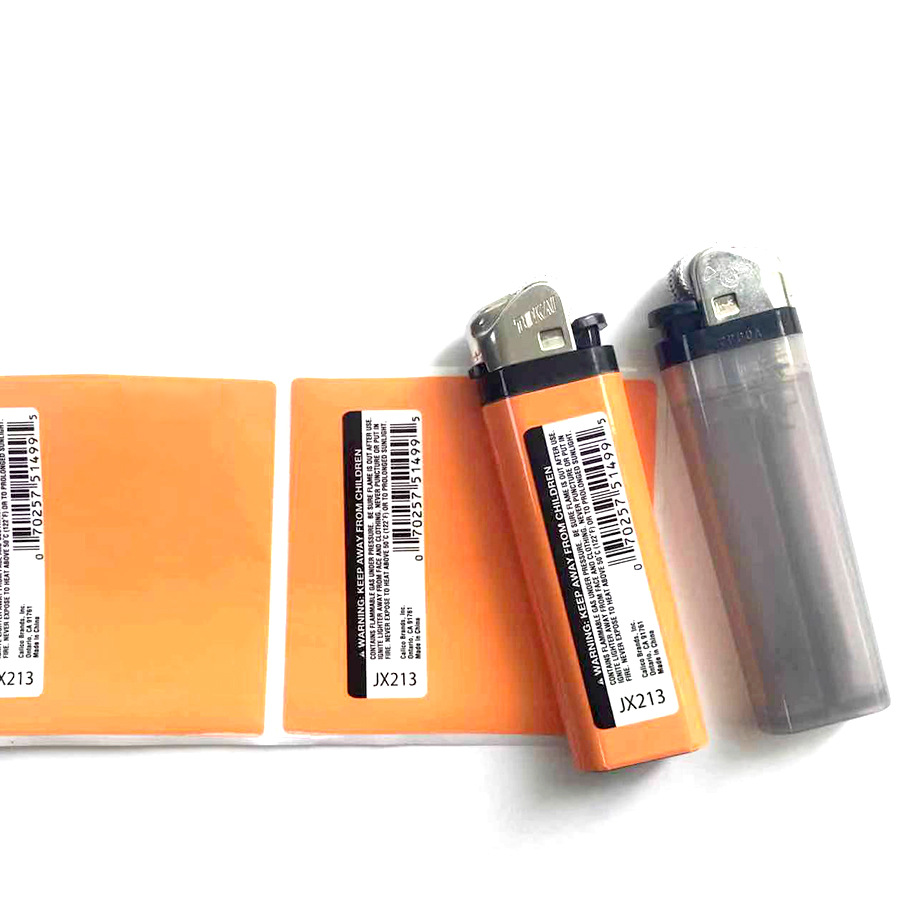
Durable, oil-resistant and waterproof. Takes a die-cut shape cleanly.

Oil, water, durable outdoor use, and custom die-cut shapes.

Not when: Food-contact applications without the right declaration, and buyers who need a recyclability claim. Tell us the application and we will confirm what we can document.

Paper
Kraft Paper

Uncoated, textured and recyclable. A natural look for craft and organic brands.

A natural, uncoated, recyclable look for craft and organic brands.

Not when: Wet applications, and fine print — the texture eats detail and small type goes soft at normal reading distance.

Metallic
Matte Silver

A brushed metallic surface that gives a technical, premium read.

A brushed metallic surface for a technical or premium read.

Not when: When the surface itself has to read as natural. It is a finish, not a colour.

Security
Holographic

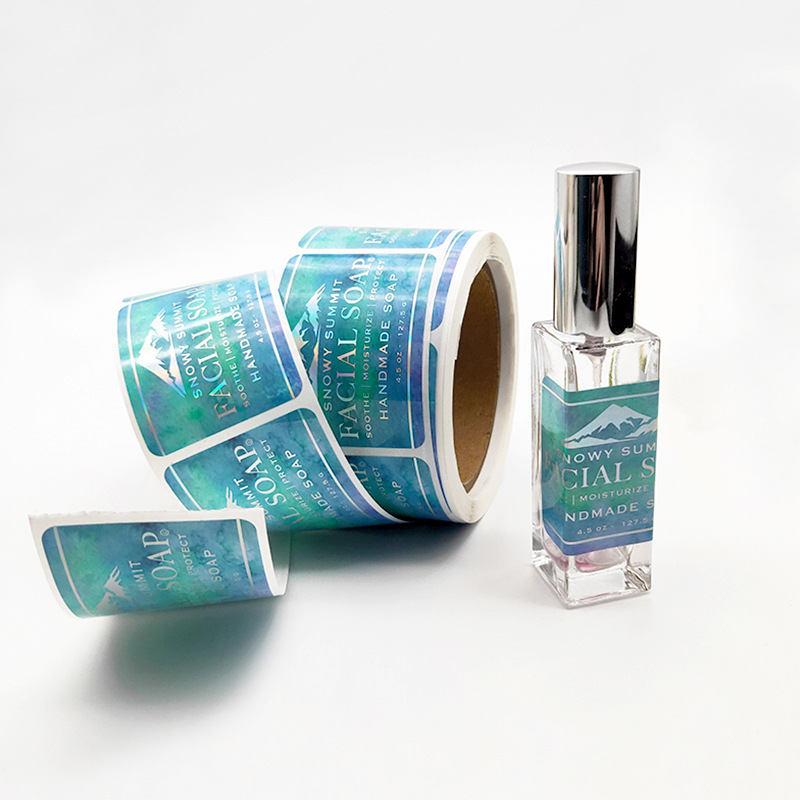
Duo-tone and diffraction film for visible anti-counterfeit effect.

Visible anti-counterfeit effect, duo-tone and diffraction film.

Not when: When you need the security to be invisible. It cannot be.

Data
Thermal Paper

Carries variable codes applied at packing time, no second print pass.

Variable data printed on the same pass — logistics and shipping labels.

Not when: Long-term archival records. Thermal stock is not built for it.

The four comparisons we are asked most

BOPP or PET?

Both are films and both handle moisture; they differ in stiffness and in what they resist. BOPP is the volume choice for bottles, cans and chilled drinks. PET is thinner, stiffer and markedly more chemical-resistant, and it holds detail in clear and metallic grades — which is why it appears where the surface is hostile or the look has to stay crisp. If condensation is the problem, either works; if chemical exposure or fine detail is, PET does.

Paper or film?

Film, if there is moisture, oil, alcohol, cold or a long shelf life. Paper, if the pack is dry, indoors, and you want the lowest cost and a printable uncoated feel. This is the shortest way to narrow a quote down to two stocks.

Is a "removable" adhesive reliable?

It depends entirely on the surface and the removal. A clean peel from smooth rigid plastic is straightforward. Peeling from woven fabric, cardboard or a coated surface can leave residue or take fibres with it. We would rather test it on your surface than promise it from a datasheet — and that test is what a sample run is for.

Does FSC apply to my label?

We hold an FSC Chain of Custody certificate covering adhesive labels and can supply FSC 100%, FSC Mix or FSC Recycled material, with the claim printed on your order documentation. Which grade applies to your label depends on the construction we agree with you — tell us the product and we will confirm what is available.

What we will not put on this page

Adhesive grades, micron thicknesses, peel strengths, temperature ranges and shelf-life figures. Those numbers are real, and they are also the ones a label manufacturer is most tempted to round in their own favour. A datasheet that claims a figure nobody tested against your surface is worse than no datasheet, because it stops you asking the question.

What we do instead: propose a construction for your surface, environment and shelf life, and send printed samples so you can test them on your own product. The sample is the specification. Ask for one and it ships with your quotation.

Ask for samples

Send us the surface and we will propose the construction

Size, surface, environment, shelf life and roughly how many you need. That is enough for a real answer rather than a price list.

Request a quote

REPLY < 24H
Artwork, dimension drawings, or a photo of the label you are matching. PDF, AI, EPS, JPG, PNG, WEBP or ZIP, up to 10 MB each. For a product video, email us the link instead.

Goes straight to our sales inbox. No account needed.

More details (optional) — quick brief
Quick brief Four taps if you can — it saves us a round of emails. All optional.
The label goes on
Where it lives
Rough quantity
Where you are